
www.industry-india.com
08
'25
Written on Modified on
Digital Transformation in the Indian Manufacturing Industry
Embracing digital transformation holistically is the need of the hour for the Indian manufacturing sector to become a global smart manufacturing hub, says Milton D’Silva.

ABB India launched its first smart instrumentation factory in Bangalore in 2022. Image credit: ABB
The term Digital Transformation (Dx) is said to have originated around 2011, initially defined by Capgemini and the MIT to signify the use of technology to improve business performance. Interestingly, the other term with which Dx is closely intertwined, Industry 4.0, also traces its origins to 2011, when the concept was first introduced publicly at the Hannover Messe in Germany. However, the two, though related, are distinct concepts. If Industry 4.0 represents the application of digital technologies to manufacturing and related industries, Digital transformation is the broader process of using digital technologies to fundamentally change how a business operates. I4.0 is focused primarily on the manufacturing sector, whereas Dx applies to all industries and businesses. Even though the term was coined in 2011, digital transformation had its origins much earlier – in the mid-20th century – with the invention of the first digital computer. The early adopters in industry started using computers for calculation, data entry and other activities, gradually leading to the trend of automating processes. The process of miniaturisation of electronics with advances in semiconductors, the rise of the PCs, and the advent of computer-aided design and manufacturing (CAD/CAM) were significant interim steps in this process, before the Internet brought the concept alive globally at the turn of the century. In fact, the Internet revolutionised connectivity and was instrumental in providing a truly level field for businesses, enterprises and individuals globally.
Like the rest of the world, India too followed the general trajectory for the process of digital transformation, though the early adopters here were the large MNCs and other corporations. A significant development in the Indian context was the liberalisation policies of the 1990s that stimulated growth and attracted foreign investments on a much larger scale. The 1990s decade was also the period when the Indian IT sector took off in a big way and benefited from the global outsourcing of services to low-cost countries, leading to a robust foundation of the digital economy that followed. However, the real impetus for digital foundation was provided by the launch of the Digital India program in 2015 by the Government of India. This was a significant turning point that aimed to create a digitally empowered society and knowledge economy by building infrastructure, delivering digital services, and promoting digital literacy.
Today, Dx is no longer an option, but an imperative, a transformation that is critical to ensure competitiveness, sustainability, and holistic growth to enable businesses to adapt to rapid technological advancements, improve efficiency, and create new value propositions. Dx is the foundation to build the new green economy with optimised resource utilisation and reduced environmental impact that can contribute to both business success and sustainability.
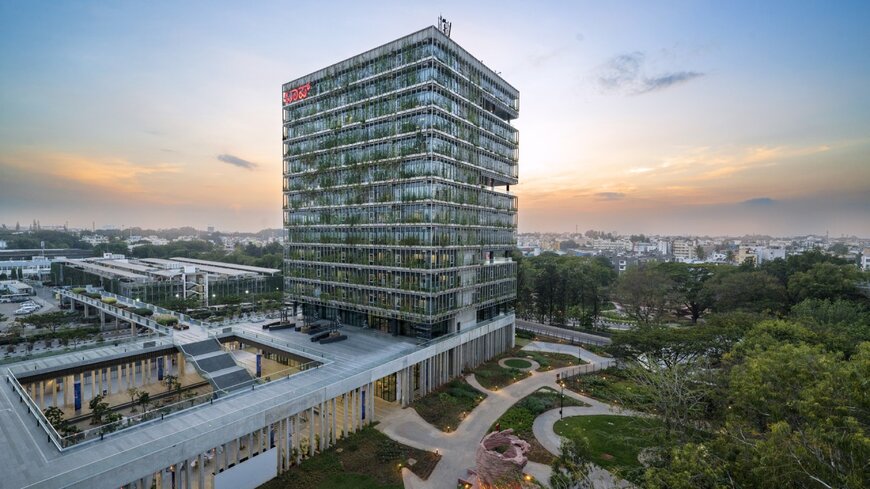
The Bosch India headquarters in Adugodi, Bengaluru is a smart campus called Spark.NXT. Image credit: Bosch
The focus of this article is on Digital Transformation in the Indian manufacturing industry and how it has helped enterprises remain competitive in the global market.
The digital imperative in manufacturing
Traditional manufacturing methods followed by the industry in general, and SMEs in particular, suffer from severe limitations on account of the outdated processes and rigid systems leading to high inefficiencies. Prominent among these challenges are factors like lack of real-time visibility in the process with no real-time monitoring of machines, processes and production lines; overuse of raw materials, energy, and manpower with minimal optimisation; and delays and inefficiencies caused by disconnected departments and legacy systems. Other contributory factors include the inability to quickly adapt to changing market demands or produce custom products at scale; reactive maintenance practices that lead to costly production stoppages; and manual inspection leads to errors and inconsistent product quality. Moreover, there is little of no use made of data, assuming it is collected and recorded, to make improvements, which leads to poor demand forecasting, lack of transparency, and high lead times. Above all, there is that inherent resistance to change and lack of digital skills among workers.
The manufacturing industry today is under tremendous competitive pressure at the global level with those who embraced the digital transformation process early on enjoying a distinct advantage over the laggards. Dx is not simply a matter of adopting new technologies, but a process of embracing the new digital paradigm that basically transforms the way a business operates, innovates, and delivers value. For manufacturing companies, this means the integration of digital technologies across all aspects of the manufacturing value chain, from product design and engineering to production, supply chain management, and customer service. All the drawbacks of traditional methods of manufacturing have effective solutions in the age of Industry 4.0, with effective adoption of digital transformation.
Among the most significant impacts of Industry 4.0 is in the way it has dramatically transformed traditional supply chains in manufacturing industries. This has been achieved by embedding intelligence and connectivity, besides automation, across the entire value chain. From the traditional linear procurement models, the process is now connected and adaptive, forming a Digital Supply Network that brings together all stakeholders like suppliers, logistics providers and retailers, creating greater transparency and responsiveness across the supply chain. With digital devices like IoT sensors, GPS and RFID, there is live tracking of inventory, shipments, and assets, and a much improved response mechanism that effectively addresses changes or disruptions that are caused by various reasons. This also addresses the other serious issue of high inventory levels caused mainly by lack of coordination, optimising replenishment cycles, in the process reducing overstocking or stockouts. In essence, Industry 4.0 transforms supply chains from cost centres into value drivers – smart, agile, resilient, and sustainable.
Most of the challenges encountered in the course of traditional manufacturing practices today have solutions in digital technologies that also effectively address the demand for agility, customisation, and efficiency needed by the contemporary world. Digital transformation, central to Industry 4.0, reshapes manufacturing by integrating intelligence, connectivity, and automation, overcoming the rigidities of traditional ecosystems and enabling agile, efficient, and sustainable operations.
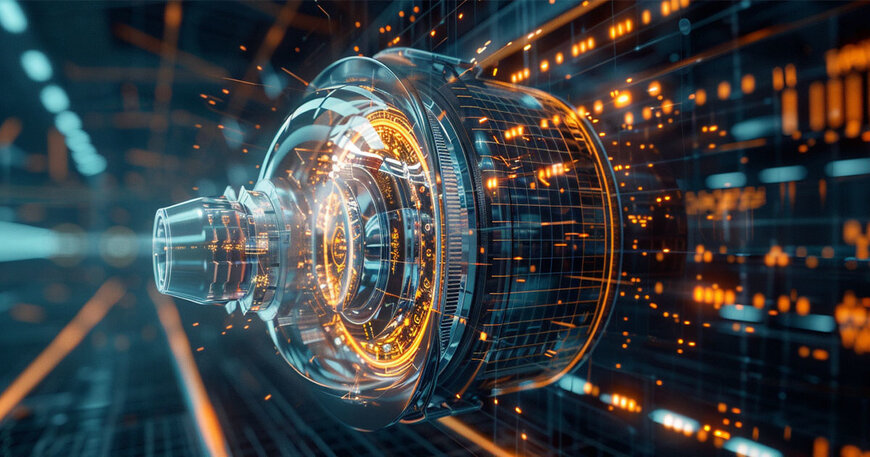
L&T Technology Services and Altair have partnered to establish a Digital Twin Center of Excellence. Image credit: Altair
Key technologies driving transformation
Dx is no magic wand that can work wonders by waiving it across the shop floor. Nor is it about investing in a new set of production machinery and watch the efficiencies improve dramatically. What it actually means is a gradual transformation in the manufacturing ecosystem that involves implementing new set of digital technologies into the production processes. It calls for substantial investments and a whole lot of efforts at convincing the mid-level executives and frontline workers of the need to implement the change, even as the idea is to optimise efficiency, increase output and enhance quality control, and at the same time reduce operational costs and lead times.
What exactly are the technologies that are driving the process of digital transformation? Well, there is a bunch of it, but to begin with, here is a brief overview of the more important ones.
1. Industrial Internet of Things (IIoT): A key driver of digital transformation, IIoT enables the connection of industrial devices and sensors to the internet, allowing for real-time data collection, analysis, and optimisation of industrial processes. This leads to increased efficiency, reduced downtime thanks to predictive maintenance, improved safety, and smarter decision-making within organisations.
2. Artificial Intelligence and Machine Learning (AI & ML): With the ability to learn from data and recognise patterns, AI makes predictions based on that learning. Machine learning, on the other hand, is about algorithms that analyse vast amounts of data to provide insights for better decision-making and personalise customer interactions. Together, AI and ML automate repetitive tasks and free human resources for more creative work and planning, further efficiency gains.
3. Cloud Computing & Edge Computing: If data is gold, it needs proper storage, which is where Cloud and edge computing come in, both crucial enablers of digital transformation. Cloud computing provides centralised data storage and processing with scalable infrastructure and advanced analytics, whereas edge computing handles data processing on the premises, minimising latency and enabling real-time responsiveness. Together, they help optimise performance, efficiency, and scalability.
4. Digital Twins: Mirror, mirror on the wall…yes, that’s what a digital twin is like – a virtual replica of the real thing. This enables organisations to conduct real-time monitoring, simulation, and optimisation. By visualising various operational scenarios, they can make more informed decisions, modify designs before implementation to improve efficiency, and drive innovation. In simple terms, accelerate the process of digital transformation without costly experiments.
5. Robotics and Automation: Automate repetitive, monotonous tasks – how exactly? The answer is more automation and robots. Robots can do most human tasks more efficiently, with very high accuracy and precision, at high speed, without getting tired. Their clerical counterparts – robotic process automation – do the same with paperwork and records. Besides making humans available for tasks that need creative thinking and planning, robots enable scalability beyond human capabilities at reduced costs, and better customer experiences.
6. 3D Printing/Additive Manufacturing: When you are all at sea, literally, with no spare part in sight, additive manufacturing (AM) can print one, right there, from 3D models in CAD. Well, if this sounds simplistic, imagine a part with complex geometries that is near impossible to produce by conventional methods. AM, also known as 3D printing, advances digital transformation in no small measure by enabling on-demand production, faster product development, and greater design flexibility – in polymers or metal. Ideal for a connected manufacturing ecosystem, it integrates well with technologies like IoT and AI to optimising processes, whether prototyping and low-volume production.
7. Cybersecurity in Smart Factories: Everything needs protection from the elements – natural or criminal. The digital infrastructure is no exception. Cyber attacks can derail the otherwise smooth process of digital transformation at any stage if the vulnerabilities are ignored, as increased connectivity continuously exposes the manufacturing process to new cyber threats. A robust cybersecurity framework is essential, integrating security from the start and focusing on proactive monitoring and secure-by-design IT services. Constant cyber vigilance is essential to a successful digital transformation, a journey and not a destination!
Adoption landscape of Dx in India
Though the global manufacturing industry is undergoing a significant digital transformation, the pace of adoption varies across the globe and within different types of manufacturing facilities. Among those at the forefront of adoption are Germany, China, Japan, and the United States. In comparison, though the technologies are available, the Indian manufacturing sector is lagging behind the developed countries in terms of overall adoption and maturity. According to the statistics maintained by the Confederation of Indian Industry (CII) – a non-governmental organisation that acts as a voice for Indian industry – large enterprises score an average of 3.4 on a 5-point scale, whereas medium-sized companies stand at 2.9, and MSMEs lag at 2.4. The top 25% of companies reach a maturity score of 4.3, while the bottom 25% fall to 1.9. The gap is particularly noticeable when it comes to the MSMEs, which are slower in adoption compared to their larger counterparts. On the other hand, Indian operations of global corporations like ABB, Bosch, Siemens and Schneider Electric, among others, are more in sync with their plants in Europe or other developed economies. In fact, in late 2022, the ABB Group in India opened its first smart instrumentation factory in Bangalore, using a unique digital production management system across all production lines. Also in 2022, the World Economic Forum recognised Schneider Electric’s Hyderabad facility in India as a sustainability lighthouse, highlighting its leadership in smart manufacturing and sustainable practices. Similarly, in mid-2022, Bosch transformed its India headquarters in Bengaluru into a new smart campus called Spark.NXT, to augment its smart manufacturing and connected industry solutions in the country. As these companies are among the leading vendors of technologies and platforms for digital transformation, they are also having a highly positive impact in encouraging others, especially their vendors, to follow their lead.
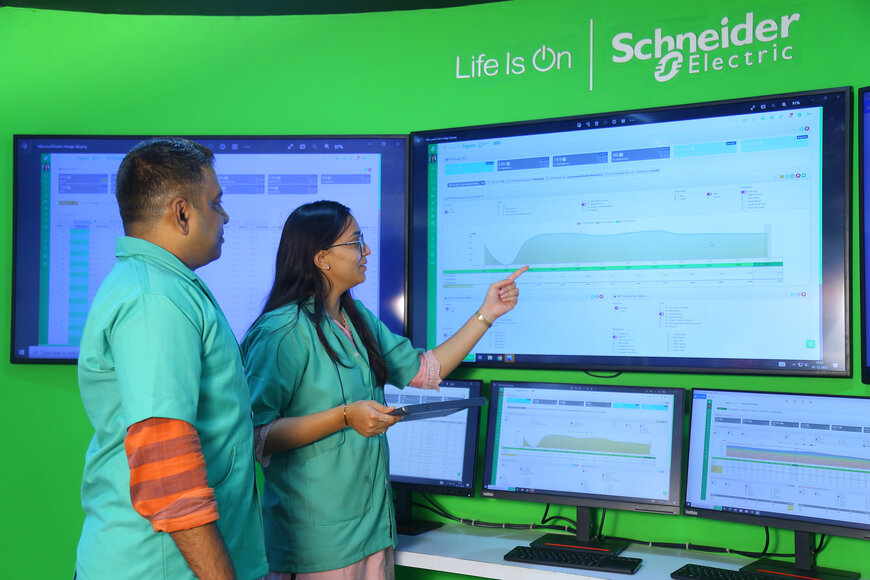
Schneider Electric’s Hyderabad facility has been recognised as a sustainability lighthouse by the World Economic Forum. Image credit: Schneider Electric
Another aspect is, not all industry segments are progressing uniformly in this journey towards digital transformation in the Indian manufacturing domain. The automotive sector, for example, has traditionally been at the forefront of adopting automation and is also leading the digital revolution. Whether it is the multinational corporations like Suzuki and Hyundai, or home-grown global companies like Tata Motors and Mahindra, the Indian automobile industry is at the forefront in terms of embracing the Industry 4.0 ecosystem. Similar is the case with leading consumer electronics and white goods giants like LG, Samsung, Havells and Godrej, to name a few. When it comes to the pharmaceutical industry, companies like Sun Pharma, Cipla, Dr Reddy's Laboratories, Lupin, and Mankind Pharma are leading the way, competing with their global counterparts. All these examples quoted above are of companies that have leveraged digital technologies to improve various aspects of their operations, including research and development, manufacturing, and supply chain management.
However, it is the wide disparity between the top 25% and bottom 25% in the digital maturity scale as evident in the CII statistics that is a real cause of concern, as most MSMEs figure in the lower end of the scale. As is the case even in developed countries, MSMEs are a critical part of the India’s economy, both in manufacturing and services sectors. According to a March 2025 Whitepaper – Digital transformation: India’s journey to Industry 4.0 excellence – released by Ernst Young, India has around 63 million MSMEs which have generated 11 crore jobs in the economy (22% of the jobs in India). MSMEs contribute to around 30% to India’s GDP, making this a critical component of the economy. It is important to note that digital tools actually help MSMEs compete more effectively with large companies, providing them with a level playing field. While cost is often cited as the main barrier in adopting digital transformation, there is a more seious reason which is lack of skills and awareness, especially for MSMEs. The EY Whitepaper confirms as much, citing a survey by the India SME Forum that indicates 70% of the MSMEs in India lack awareness of digital tools.
It is precisely to address these issues and concerns the Government of India has launched a slew of initiatives during the last few years. These include the Digital MSME Scheme, SAMARTH Udyog Bharat 4.0, and Make in India 2.0, which are pivotal in accelerating Industry 4.0 adoption. These programs promote advanced manufacturing practices, provide financial incentives, and enhance digital infrastructure. The Digital MSME Scheme, for example, aims to promote cloud computing, AI, and IoT adoption among MSMEs and provides financial assistance on adoption of cloud-based software services. Similarly, the MSME Competitive Lean Scheme helps MSMEs implement Lean Manufacturing, Automation, and Robotics. The SAMARTH Udyog Bharat 4.0, aims to promote Industry 4.0 adoption through dedicated Smart Manufacturing Demonstration Centres (SMDCs). Above all, it is the Make in India 2.0 initiative that is an ambitious programme launched with the objective of facilitating investment, fostering innovation, and building best-in-class manufacturing infrastructure, making it easy to do business and enhancing skill development. The primary objective of this initiative is to attract investments from across the globe and strengthen India's manufacturing sector, with the best-in-class technologies, which translates into the larger objective of embracing digital transformation.
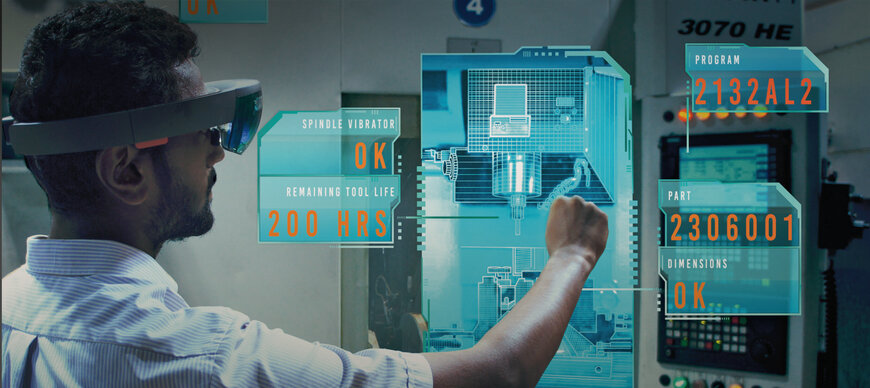
Bharat Forge has operationalised an Industry 4.0 Center of Excellence for incubating digital transformation ideas. Image credit: Bharat Forge
Challenges to digital transformation in India
Almost all companies in the manufacturing domain, regardless of size and scale, today understand the importance of digital transformation and many, in fact, are under various stages of the implementation process. However, there are some real challenges in the process and the foremost is the legacy systems and infrastructure gaps. Existing machines and equipment in most Indian manufacturing plants are decades old and often in good working. But these are systems built for specific tasks and not designed to integrate with modern digital platforms like IoT, AI/ML, or cloud computing. Retrofitting these machines with sensors is not always a feasible option. At the same time, the cost of replacing these machines and equipment is too high.
That brings up another serious challenge – that of high capital investment required for new machinery and equipment, especially for companies that are barely profitable. Unless the return on investment (RoI) factor is clearly worked out in advance with careful planning and a roadmap, undertaking such a major plant upgrade is simply not possible, in the absence of long-term vision.
Lack of adequate skills is yet another challenge, which in part contributes to the two primary challenges mentioned above – to undertake some retrofitting with sensors and start capturing data in legacy plants on the one hand; and start investing in gradual plant upgradation on the other. This is also further complicated by very natural and human tendency of resisting any change that disturbs the status quo. Almost all manufacturing units have unionised labour and invariably, a confrontationist position vis-à-vis the management, where any move by the latter is viewed with extreme suspicion as going against the employee interests.
Of the other challenges, data integration and interoperability in part is a result of all the three mentioned above. While legacy equipment produced no digital data, whatever was collected through conventional instruments was rarely recorded and even if it did, remained siloed. If at all new machinery was inducted, there was even less chance of it being compatible with existing machinery and that is another challenge altogether, one of a multitude of protocols and incompatibilities, with no standardisation and no platform that could bring the all together in a vendor-neutral and multi-protocol ecosystem.
Finally, the elephant in the digital room is cybersecurity, and like most other elephants, one that tends to be ignored until it invariably goes on a rampage. Even with the modern, state-of-the-art industrial plants, cyberattacks are just a momentary lapse of guard away, the vulnerabilities being simply too many. With retrofitted equipment in hybrid environment riddled with operational incompatibilities, the possibilities of breaches are too many to plug effectively. Upgrading for foolproof cybersecurity often means replacing entire systems, which many SMEs find unaffordable.
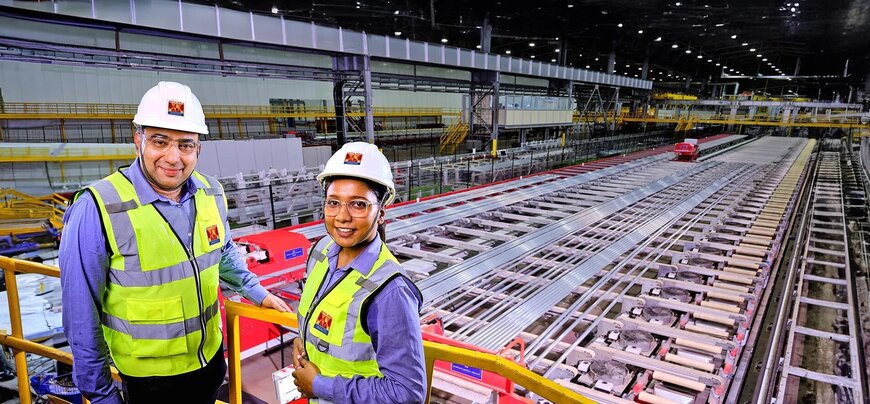
In early 2025, Hindalco unveiled plans to invest INR 45,000 crore in aluminium and copper segments. Image credit: Hindalco
Unique trends in digital transformation of Indian industry
At the macro level, digital transformation of the Indian manufacturing sector is no different from what is happening globally. The adoption of Industry 4.0 technologies, in general, and many of the characteristics with trends are similar. However, at the micro level, there are many differences that are shaped by local realities and challenges, policy interventions, and structural differences. The following paragraphs present an overview of the key points of comparison:
1. Focus on cost-efficiency over innovation
The Indian industry in general is cost-sensitive and RoI figures prominently in any investment decision, more so, when it comes to adopting digital technologies. This leads to selective or incremental adoption, especially among small and medium enterprises (SMEs).
2. SME-dominated ecosystem
As noted early in this article, MSMEs account for nearly a third of the total manufacturing output in India. Many of these units operate with legacy systems, limited resources and hence are way down on the digital maturity scale. For these small industries, digital means digitisation rather than digitalisation – the transformation being restricted to basic automation and ERP.
3. Government as a key enabler
Subsidies and government support is vital for MSMEs in the Indian context and so it is in the digital transformation, where the sector is dependent on government policy initiatives (mentioned earlier) such as: Make in India, Digital India, PLI schemes and SAMARTH Udyog Bharat 4.0. These policies have helped simulate change and a movement towards smart manufacturing, especially in sectors like electronics, automotive, and textiles.
4. Frugal innovation and indigenous solutions
A culture of frugal innovation, which is popularly referred to as ‘Jugaad’ in India, has led to the development of cost-effective and localised digital solutions – like affordable IoT kits, SCADA-lite platforms, and customised ERP for small factories. Several global vendors in India too have launched ‘lean versions’ of their solutions tailor-made for what is essentially a cost-sensitive market.
5. Digital skilling and workforce challenges
While India as a labour surplus country has no dearth of workers, when it comes to digital skills, there is a wide gap in the demand-supply equation, particularly in Tier-2 and -3 cities. Many operators and technicians are simply not equipped to manage or maintain advanced systems.
The term Digital Transformation (Dx) is said to have originated around 2011, initially defined by Capgemini and the MIT to signify the use of technology to improve business performance. Interestingly, the other term with which Dx is closely intertwined, Industry 4.0, also traces its origins to 2011, when the concept was first introduced publicly at the Hannover Messe in Germany. However, the two, though related, are distinct concepts. If Industry 4.0 represents the application of digital technologies to manufacturing and related industries, Digital transformation is the broader process of using digital technologies to fundamentally change how a business operates. I4.0 is focused primarily on the manufacturing sector, whereas Dx applies to all industries and businesses. Even though the term was coined in 2011, digital transformation had its origins much earlier – in the mid-20th century – with the invention of the first digital computer. The early adopters in industry started using computers for calculation, data entry and other activities, gradually leading to the trend of automating processes. The process of miniaturisation of electronics with advances in semiconductors, the rise of the PCs, and the advent of computer-aided design and manufacturing (CAD/CAM) were significant interim steps in this process, before the Internet brought the concept alive globally at the turn of the century. In fact, the Internet revolutionised connectivity and was instrumental in providing a truly level field for businesses, enterprises and individuals globally.
Like the rest of the world, India too followed the general trajectory for the process of digital transformation, though the early adopters here were the large MNCs and other corporations. A significant development in the Indian context was the liberalisation policies of the 1990s that stimulated growth and attracted foreign investments on a much larger scale. The 1990s decade was also the period when the Indian IT sector took off in a big way and benefited from the global outsourcing of services to low-cost countries, leading to a robust foundation of the digital economy that followed. However, the real impetus for digital foundation was provided by the launch of the Digital India program in 2015 by the Government of India. This was a significant turning point that aimed to create a digitally empowered society and knowledge economy by building infrastructure, delivering digital services, and promoting digital literacy.
Today, Dx is no longer an option, but an imperative, a transformation that is critical to ensure competitiveness, sustainability, and holistic growth to enable businesses to adapt to rapid technological advancements, improve efficiency, and create new value propositions. Dx is the foundation to build the new green economy with optimised resource utilisation and reduced environmental impact that can contribute to both business success and sustainability.
The Bosch India headquarters in Adugodi, Bengaluru is a smart campus called Spark.NXT. Image credit: Bosch
The focus of this article is on Digital Transformation in the Indian manufacturing industry and how it has helped enterprises remain competitive in the global market.
The digital imperative in manufacturing
Traditional manufacturing methods followed by the industry in general, and SMEs in particular, suffer from severe limitations on account of the outdated processes and rigid systems leading to high inefficiencies. Prominent among these challenges are factors like lack of real-time visibility in the process with no real-time monitoring of machines, processes and production lines; overuse of raw materials, energy, and manpower with minimal optimisation; and delays and inefficiencies caused by disconnected departments and legacy systems. Other contributory factors include the inability to quickly adapt to changing market demands or produce custom products at scale; reactive maintenance practices that lead to costly production stoppages; and manual inspection leads to errors and inconsistent product quality. Moreover, there is little of no use made of data, assuming it is collected and recorded, to make improvements, which leads to poor demand forecasting, lack of transparency, and high lead times. Above all, there is that inherent resistance to change and lack of digital skills among workers.
The manufacturing industry today is under tremendous competitive pressure at the global level with those who embraced the digital transformation process early on enjoying a distinct advantage over the laggards. Dx is not simply a matter of adopting new technologies, but a process of embracing the new digital paradigm that basically transforms the way a business operates, innovates, and delivers value. For manufacturing companies, this means the integration of digital technologies across all aspects of the manufacturing value chain, from product design and engineering to production, supply chain management, and customer service. All the drawbacks of traditional methods of manufacturing have effective solutions in the age of Industry 4.0, with effective adoption of digital transformation.
Among the most significant impacts of Industry 4.0 is in the way it has dramatically transformed traditional supply chains in manufacturing industries. This has been achieved by embedding intelligence and connectivity, besides automation, across the entire value chain. From the traditional linear procurement models, the process is now connected and adaptive, forming a Digital Supply Network that brings together all stakeholders like suppliers, logistics providers and retailers, creating greater transparency and responsiveness across the supply chain. With digital devices like IoT sensors, GPS and RFID, there is live tracking of inventory, shipments, and assets, and a much improved response mechanism that effectively addresses changes or disruptions that are caused by various reasons. This also addresses the other serious issue of high inventory levels caused mainly by lack of coordination, optimising replenishment cycles, in the process reducing overstocking or stockouts. In essence, Industry 4.0 transforms supply chains from cost centres into value drivers – smart, agile, resilient, and sustainable.
Most of the challenges encountered in the course of traditional manufacturing practices today have solutions in digital technologies that also effectively address the demand for agility, customisation, and efficiency needed by the contemporary world. Digital transformation, central to Industry 4.0, reshapes manufacturing by integrating intelligence, connectivity, and automation, overcoming the rigidities of traditional ecosystems and enabling agile, efficient, and sustainable operations.
L&T Technology Services and Altair have partnered to establish a Digital Twin Center of Excellence. Image credit: Altair
Key technologies driving transformation
Dx is no magic wand that can work wonders by waiving it across the shop floor. Nor is it about investing in a new set of production machinery and watch the efficiencies improve dramatically. What it actually means is a gradual transformation in the manufacturing ecosystem that involves implementing new set of digital technologies into the production processes. It calls for substantial investments and a whole lot of efforts at convincing the mid-level executives and frontline workers of the need to implement the change, even as the idea is to optimise efficiency, increase output and enhance quality control, and at the same time reduce operational costs and lead times.
What exactly are the technologies that are driving the process of digital transformation? Well, there is a bunch of it, but to begin with, here is a brief overview of the more important ones.
1. Industrial Internet of Things (IIoT): A key driver of digital transformation, IIoT enables the connection of industrial devices and sensors to the internet, allowing for real-time data collection, analysis, and optimisation of industrial processes. This leads to increased efficiency, reduced downtime thanks to predictive maintenance, improved safety, and smarter decision-making within organisations.
2. Artificial Intelligence and Machine Learning (AI & ML): With the ability to learn from data and recognise patterns, AI makes predictions based on that learning. Machine learning, on the other hand, is about algorithms that analyse vast amounts of data to provide insights for better decision-making and personalise customer interactions. Together, AI and ML automate repetitive tasks and free human resources for more creative work and planning, further efficiency gains.
3. Cloud Computing & Edge Computing: If data is gold, it needs proper storage, which is where Cloud and edge computing come in, both crucial enablers of digital transformation. Cloud computing provides centralised data storage and processing with scalable infrastructure and advanced analytics, whereas edge computing handles data processing on the premises, minimising latency and enabling real-time responsiveness. Together, they help optimise performance, efficiency, and scalability.
4. Digital Twins: Mirror, mirror on the wall…yes, that’s what a digital twin is like – a virtual replica of the real thing. This enables organisations to conduct real-time monitoring, simulation, and optimisation. By visualising various operational scenarios, they can make more informed decisions, modify designs before implementation to improve efficiency, and drive innovation. In simple terms, accelerate the process of digital transformation without costly experiments.
5. Robotics and Automation: Automate repetitive, monotonous tasks – how exactly? The answer is more automation and robots. Robots can do most human tasks more efficiently, with very high accuracy and precision, at high speed, without getting tired. Their clerical counterparts – robotic process automation – do the same with paperwork and records. Besides making humans available for tasks that need creative thinking and planning, robots enable scalability beyond human capabilities at reduced costs, and better customer experiences.
6. 3D Printing/Additive Manufacturing: When you are all at sea, literally, with no spare part in sight, additive manufacturing (AM) can print one, right there, from 3D models in CAD. Well, if this sounds simplistic, imagine a part with complex geometries that is near impossible to produce by conventional methods. AM, also known as 3D printing, advances digital transformation in no small measure by enabling on-demand production, faster product development, and greater design flexibility – in polymers or metal. Ideal for a connected manufacturing ecosystem, it integrates well with technologies like IoT and AI to optimising processes, whether prototyping and low-volume production.
7. Cybersecurity in Smart Factories: Everything needs protection from the elements – natural or criminal. The digital infrastructure is no exception. Cyber attacks can derail the otherwise smooth process of digital transformation at any stage if the vulnerabilities are ignored, as increased connectivity continuously exposes the manufacturing process to new cyber threats. A robust cybersecurity framework is essential, integrating security from the start and focusing on proactive monitoring and secure-by-design IT services. Constant cyber vigilance is essential to a successful digital transformation, a journey and not a destination!
Adoption landscape of Dx in India
Though the global manufacturing industry is undergoing a significant digital transformation, the pace of adoption varies across the globe and within different types of manufacturing facilities. Among those at the forefront of adoption are Germany, China, Japan, and the United States. In comparison, though the technologies are available, the Indian manufacturing sector is lagging behind the developed countries in terms of overall adoption and maturity. According to the statistics maintained by the Confederation of Indian Industry (CII) – a non-governmental organisation that acts as a voice for Indian industry – large enterprises score an average of 3.4 on a 5-point scale, whereas medium-sized companies stand at 2.9, and MSMEs lag at 2.4. The top 25% of companies reach a maturity score of 4.3, while the bottom 25% fall to 1.9. The gap is particularly noticeable when it comes to the MSMEs, which are slower in adoption compared to their larger counterparts. On the other hand, Indian operations of global corporations like ABB, Bosch, Siemens and Schneider Electric, among others, are more in sync with their plants in Europe or other developed economies. In fact, in late 2022, the ABB Group in India opened its first smart instrumentation factory in Bangalore, using a unique digital production management system across all production lines. Also in 2022, the World Economic Forum recognised Schneider Electric’s Hyderabad facility in India as a sustainability lighthouse, highlighting its leadership in smart manufacturing and sustainable practices. Similarly, in mid-2022, Bosch transformed its India headquarters in Bengaluru into a new smart campus called Spark.NXT, to augment its smart manufacturing and connected industry solutions in the country. As these companies are among the leading vendors of technologies and platforms for digital transformation, they are also having a highly positive impact in encouraging others, especially their vendors, to follow their lead.
Schneider Electric’s Hyderabad facility has been recognised as a sustainability lighthouse by the World Economic Forum. Image credit: Schneider Electric
Another aspect is, not all industry segments are progressing uniformly in this journey towards digital transformation in the Indian manufacturing domain. The automotive sector, for example, has traditionally been at the forefront of adopting automation and is also leading the digital revolution. Whether it is the multinational corporations like Suzuki and Hyundai, or home-grown global companies like Tata Motors and Mahindra, the Indian automobile industry is at the forefront in terms of embracing the Industry 4.0 ecosystem. Similar is the case with leading consumer electronics and white goods giants like LG, Samsung, Havells and Godrej, to name a few. When it comes to the pharmaceutical industry, companies like Sun Pharma, Cipla, Dr Reddy's Laboratories, Lupin, and Mankind Pharma are leading the way, competing with their global counterparts. All these examples quoted above are of companies that have leveraged digital technologies to improve various aspects of their operations, including research and development, manufacturing, and supply chain management.
However, it is the wide disparity between the top 25% and bottom 25% in the digital maturity scale as evident in the CII statistics that is a real cause of concern, as most MSMEs figure in the lower end of the scale. As is the case even in developed countries, MSMEs are a critical part of the India’s economy, both in manufacturing and services sectors. According to a March 2025 Whitepaper – Digital transformation: India’s journey to Industry 4.0 excellence – released by Ernst Young, India has around 63 million MSMEs which have generated 11 crore jobs in the economy (22% of the jobs in India). MSMEs contribute to around 30% to India’s GDP, making this a critical component of the economy. It is important to note that digital tools actually help MSMEs compete more effectively with large companies, providing them with a level playing field. While cost is often cited as the main barrier in adopting digital transformation, there is a more seious reason which is lack of skills and awareness, especially for MSMEs. The EY Whitepaper confirms as much, citing a survey by the India SME Forum that indicates 70% of the MSMEs in India lack awareness of digital tools.
It is precisely to address these issues and concerns the Government of India has launched a slew of initiatives during the last few years. These include the Digital MSME Scheme, SAMARTH Udyog Bharat 4.0, and Make in India 2.0, which are pivotal in accelerating Industry 4.0 adoption. These programs promote advanced manufacturing practices, provide financial incentives, and enhance digital infrastructure. The Digital MSME Scheme, for example, aims to promote cloud computing, AI, and IoT adoption among MSMEs and provides financial assistance on adoption of cloud-based software services. Similarly, the MSME Competitive Lean Scheme helps MSMEs implement Lean Manufacturing, Automation, and Robotics. The SAMARTH Udyog Bharat 4.0, aims to promote Industry 4.0 adoption through dedicated Smart Manufacturing Demonstration Centres (SMDCs). Above all, it is the Make in India 2.0 initiative that is an ambitious programme launched with the objective of facilitating investment, fostering innovation, and building best-in-class manufacturing infrastructure, making it easy to do business and enhancing skill development. The primary objective of this initiative is to attract investments from across the globe and strengthen India's manufacturing sector, with the best-in-class technologies, which translates into the larger objective of embracing digital transformation.
Bharat Forge has operationalised an Industry 4.0 Center of Excellence for incubating digital transformation ideas. Image credit: Bharat Forge
Challenges to digital transformation in India
Almost all companies in the manufacturing domain, regardless of size and scale, today understand the importance of digital transformation and many, in fact, are under various stages of the implementation process. However, there are some real challenges in the process and the foremost is the legacy systems and infrastructure gaps. Existing machines and equipment in most Indian manufacturing plants are decades old and often in good working. But these are systems built for specific tasks and not designed to integrate with modern digital platforms like IoT, AI/ML, or cloud computing. Retrofitting these machines with sensors is not always a feasible option. At the same time, the cost of replacing these machines and equipment is too high.
That brings up another serious challenge – that of high capital investment required for new machinery and equipment, especially for companies that are barely profitable. Unless the return on investment (RoI) factor is clearly worked out in advance with careful planning and a roadmap, undertaking such a major plant upgrade is simply not possible, in the absence of long-term vision.
Lack of adequate skills is yet another challenge, which in part contributes to the two primary challenges mentioned above – to undertake some retrofitting with sensors and start capturing data in legacy plants on the one hand; and start investing in gradual plant upgradation on the other. This is also further complicated by very natural and human tendency of resisting any change that disturbs the status quo. Almost all manufacturing units have unionised labour and invariably, a confrontationist position vis-à-vis the management, where any move by the latter is viewed with extreme suspicion as going against the employee interests.
Of the other challenges, data integration and interoperability in part is a result of all the three mentioned above. While legacy equipment produced no digital data, whatever was collected through conventional instruments was rarely recorded and even if it did, remained siloed. If at all new machinery was inducted, there was even less chance of it being compatible with existing machinery and that is another challenge altogether, one of a multitude of protocols and incompatibilities, with no standardisation and no platform that could bring the all together in a vendor-neutral and multi-protocol ecosystem.
Finally, the elephant in the digital room is cybersecurity, and like most other elephants, one that tends to be ignored until it invariably goes on a rampage. Even with the modern, state-of-the-art industrial plants, cyberattacks are just a momentary lapse of guard away, the vulnerabilities being simply too many. With retrofitted equipment in hybrid environment riddled with operational incompatibilities, the possibilities of breaches are too many to plug effectively. Upgrading for foolproof cybersecurity often means replacing entire systems, which many SMEs find unaffordable.
In early 2025, Hindalco unveiled plans to invest INR 45,000 crore in aluminium and copper segments. Image credit: Hindalco
Unique trends in digital transformation of Indian industry
At the macro level, digital transformation of the Indian manufacturing sector is no different from what is happening globally. The adoption of Industry 4.0 technologies, in general, and many of the characteristics with trends are similar. However, at the micro level, there are many differences that are shaped by local realities and challenges, policy interventions, and structural differences. The following paragraphs present an overview of the key points of comparison:
1. Focus on cost-efficiency over innovation
The Indian industry in general is cost-sensitive and RoI figures prominently in any investment decision, more so, when it comes to adopting digital technologies. This leads to selective or incremental adoption, especially among small and medium enterprises (SMEs).
2. SME-dominated ecosystem
As noted early in this article, MSMEs account for nearly a third of the total manufacturing output in India. Many of these units operate with legacy systems, limited resources and hence are way down on the digital maturity scale. For these small industries, digital means digitisation rather than digitalisation – the transformation being restricted to basic automation and ERP.
3. Government as a key enabler
Subsidies and government support is vital for MSMEs in the Indian context and so it is in the digital transformation, where the sector is dependent on government policy initiatives (mentioned earlier) such as: Make in India, Digital India, PLI schemes and SAMARTH Udyog Bharat 4.0. These policies have helped simulate change and a movement towards smart manufacturing, especially in sectors like electronics, automotive, and textiles.
4. Frugal innovation and indigenous solutions
A culture of frugal innovation, which is popularly referred to as ‘Jugaad’ in India, has led to the development of cost-effective and localised digital solutions – like affordable IoT kits, SCADA-lite platforms, and customised ERP for small factories. Several global vendors in India too have launched ‘lean versions’ of their solutions tailor-made for what is essentially a cost-sensitive market.
5. Digital skilling and workforce challenges
While India as a labour surplus country has no dearth of workers, when it comes to digital skills, there is a wide gap in the demand-supply equation, particularly in Tier-2 and -3 cities. Many operators and technicians are simply not equipped to manage or maintain advanced systems.
6. Supply chain transparency and data integration
Indian supply chains are often fragmented, with limited real-time visibility. Digitisation is being applied in pockets (e.g., smart warehousing, logistics tracking), but integration remains a challenge.
7. Sector-specific digitisation
In India, certain sectors like automotive, pharmaceuticals, and electronics are seeing higher digital adoption due to global integration and regulatory pressure. Others, like textiles or food processing, lag behind.
8. Cybersecurity and data sovereignty
Cybersecurity is an emerging concern, but many SMEs in India still lack robust policies. Data localisation and sovereignty are growing issues as cloud adoption rises.
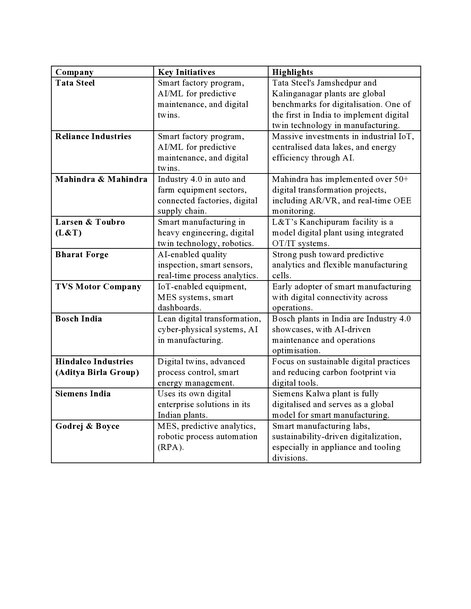
The top 10 in Indian manufacturing sector
Here is a list of 10 companies leading digital transformation in the Indian manufacturing sector, based on their innovation, adoption of Industry 4.0 technologies, investments in smart factories, and influence on the broader industrial ecosystem:
Conclusion
The Indian manufacturing sector’s current contribution to the national Gross Domestic Product (GDP, which is a comprehensive measure of the total economic activity in a country, usually measured over a year. Ideally, developed countries have a robust manufacturing sector that contributes around 25% or more to their national GDP. So in the Indian context, digital transformation is even more important for the manufacturing sector to increase production, with improved quality and enhanced efficiency.
On the other hand, the Indian manufacturing sector’s approach to digital transformation is still cautious, marked by frugality and a piecemeal approach, which makes the adoption curve rather steep to gain the necessary pace. While the large players in the more organised segments are almost on par with the global peers, the MSMEs that are a vital part of the Indian manufacturing sector need to adopt a more holistic approach. Digital transformation has the necessary solutions in terms of technologies like cloud computing, IIoT, and AI to streamline operations, boost productivity, and enable data-driven decision making, for the manufacturing sector to realise India’s potential to become a global smart manufacturing hub.
Indian supply chains are often fragmented, with limited real-time visibility. Digitisation is being applied in pockets (e.g., smart warehousing, logistics tracking), but integration remains a challenge.
7. Sector-specific digitisation
In India, certain sectors like automotive, pharmaceuticals, and electronics are seeing higher digital adoption due to global integration and regulatory pressure. Others, like textiles or food processing, lag behind.
8. Cybersecurity and data sovereignty
Cybersecurity is an emerging concern, but many SMEs in India still lack robust policies. Data localisation and sovereignty are growing issues as cloud adoption rises.
The top 10 in Indian manufacturing sector
Here is a list of 10 companies leading digital transformation in the Indian manufacturing sector, based on their innovation, adoption of Industry 4.0 technologies, investments in smart factories, and influence on the broader industrial ecosystem:
Conclusion
The Indian manufacturing sector’s current contribution to the national Gross Domestic Product (GDP, which is a comprehensive measure of the total economic activity in a country, usually measured over a year. Ideally, developed countries have a robust manufacturing sector that contributes around 25% or more to their national GDP. So in the Indian context, digital transformation is even more important for the manufacturing sector to increase production, with improved quality and enhanced efficiency.
On the other hand, the Indian manufacturing sector’s approach to digital transformation is still cautious, marked by frugality and a piecemeal approach, which makes the adoption curve rather steep to gain the necessary pace. While the large players in the more organised segments are almost on par with the global peers, the MSMEs that are a vital part of the Indian manufacturing sector need to adopt a more holistic approach. Digital transformation has the necessary solutions in terms of technologies like cloud computing, IIoT, and AI to streamline operations, boost productivity, and enable data-driven decision making, for the manufacturing sector to realise India’s potential to become a global smart manufacturing hub.
