
www.industry-india.com
08
'26
Written on Modified on
Petrochemical Expansion and Resid Upgrading at Indian Refineries
Technip Energies has secured two large contracts from Bharat Petroleum Corporation Limited to deliver new petrochemical production and residue upgrading capacity at BPCL’s Bina and Mumbai refineries.
www.ten.com
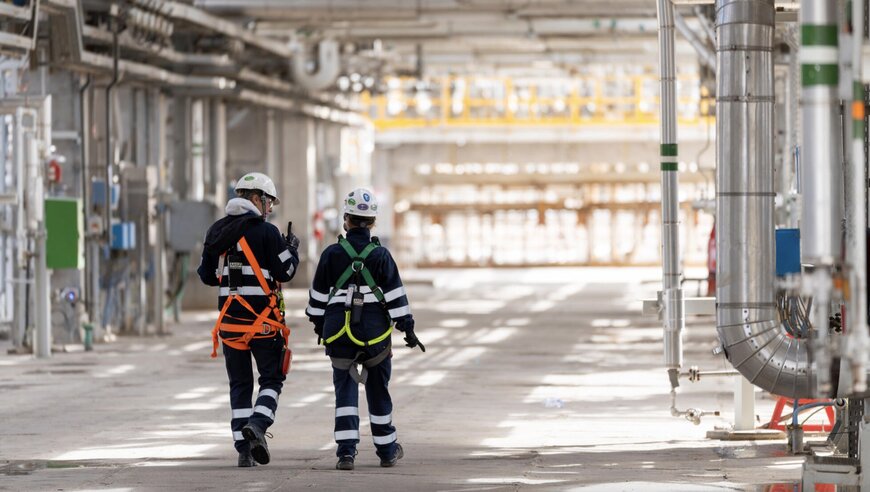
Technip Energies has been awarded two major engineering contracts by BPCL covering petrochemical expansion and advanced residue conversion projects in India. The contracts support BPCL’s strategy to increase refining complexity, expand petrochemical output, and improve the value extracted from heavy refinery streams at its Bina refinery in Madhya Pradesh and Mumbai refinery in Maharashtra.
Polypropylene and Butene-1 production at Bina refinery
At the Bina refinery, Technip Energies will execute Engineering, Procurement, Construction, and Commissioning (EPCC) for new polypropylene and Butene-1 units. The facilities are designed to produce 550 kilotonnes per annum (KTPA) of polypropylene and 50 KTPA of Butene-1.
Polypropylene and Butene-1 are key intermediates for downstream manufacturing sectors, including packaging, piping systems, and automotive components. The project forms part of BPCL’s Bina Petchem and Refinery Expansion Project, which combines an increase in refining capacity with the addition of a new cracker and multiple downstream petrochemical units. This integration reflects a broader industry shift toward refinery–petrochemical complexes that maximize conversion of hydrocarbons into higher-value chemical products.
First petro resid FCC unit at Mumbai refinery
The second contract covers Engineering, Procurement, and Construction management services (EPsCm) for a 3 million tonnes per annum (MMTPA) Petro Resid Fluidized Catalytic Cracker (PRFCC) unit at BPCL’s Mumbai refinery. This will be India’s first PRFCC installation.
A PRFCC is designed to process heavy refinery residues that are typically difficult to upgrade, converting them into lighter and more valuable products such as petrochemical feedstocks and transportation fuels. Compared with conventional FCC units, PRFCC technology enables deeper conversion of residual streams, improving overall refinery yield and flexibility. The project scope also includes auxiliary process units, along with associated offsites and utilities required for integrated operation.
Industrial and strategic context
Both projects address structural changes in the refining sector, where demand growth for fuels is increasingly complemented by rising demand for petrochemicals. By expanding polypropylene capacity and introducing advanced residue conversion technology, BPCL is positioning its refineries to improve margins, reduce low-value residue output, and strengthen integration with downstream chemical markets.
For Technip Energies, the awards build on a long-standing relationship with BPCL spanning more than two decades. With over 50 years of operational experience in India and engineering centers in multiple cities, the company is positioned to manage large-scale, complex projects that combine refining, petrochemicals, and advanced process technologies.
Implications for India’s refining and petrochemical landscape
The Bina and Mumbai projects highlight India’s continued investment in higher-complexity refineries capable of supporting domestic manufacturing and reducing reliance on imports of key polymers and chemical intermediates. The introduction of the country’s first PRFCC unit also represents a technical milestone, enabling more efficient utilization of heavy crude slates while supporting the expansion of India’s petrochemical value chain.
www.ten.com
