
www.industry-india.com
03
'26
Written on Modified on
Wireless R&D Infrastructure Expansion in Hyderabad
Silicon Labs and U.S. Consulate Hyderabad highlight cross-border collaboration as facility expansion strengthens wireless engineering and digital infrastructure capacity in India.
www.silabs.com
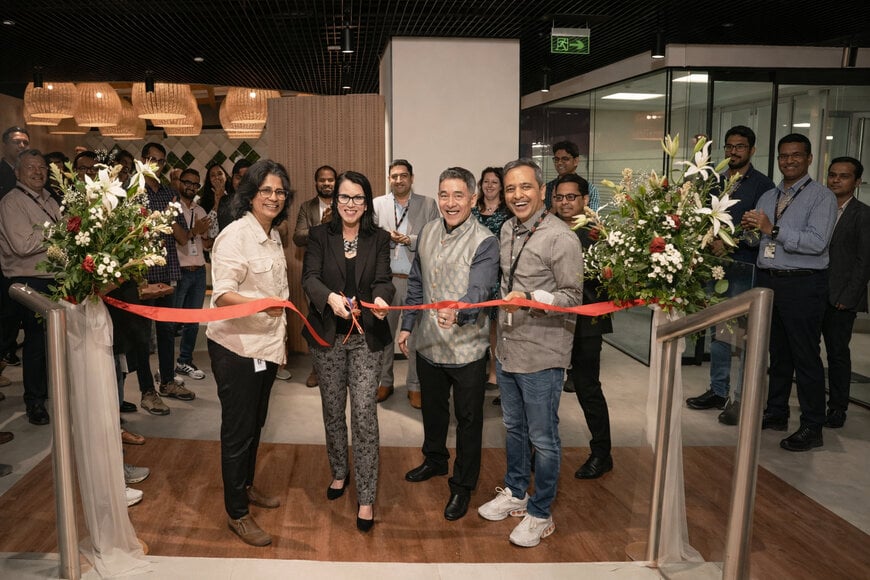
Silicon Labs has expanded its Hyderabad engineering facility by approximately 50%, increasing laboratory and operational space to support global wireless research and development. The expansion reinforces the company’s distributed R&D model and strengthens U.S. India cooperation in advanced semiconductor and connectivity technologies.
Context of the Cooperation
The expansion ceremony was attended by Laura E. Williams, U.S. Consul General in Hyderabad, reflecting institutional support for cross-border technology collaboration between the United States and India.
Silicon Labs, headquartered in Austin, Texas, develops low-power wireless semiconductors and software platforms used in IoT devices, smart building systems, industrial automation, and consumer electronics. Its Hyderabad site, established in 2020, has become a core engineering center within the company’s global R&D network spanning North America, Europe, and Asia.
The cooperation between Silicon Labs and U.S. diplomatic representatives is institutional rather than contractual. It underscores the strategic role of international engineering centers in semiconductor development, where design, validation, firmware development, and system integration are distributed across multiple regions.
Technical Infrastructure and Responsibilities
The expanded Hyderabad facility includes new advanced laboratories dedicated to wireless design, hardware validation, and system integration. These labs support development across:
- Low-power wireless SoCs
- Embedded software and protocol stacks
- RF testing and compliance validation
- Hardware-software co-verification
Engineering teams in Hyderabad contribute to silicon design support, firmware development, connectivity stack implementation (e.g., Bluetooth, Wi-Fi, and proprietary low-power protocols), and system-level validation. The facility also integrates product engineering, technical marketing, operations support, and IT functions.
The additional lab capacity enables controlled RF testing environments, signal integrity validation, interoperability testing, and pre-certification processes aligned with international wireless standards. Expanded collaboration spaces are designed to support cross-functional design reviews and distributed development workflows.
Deployment and Operational Integration
The expansion increases the physical footprint of the Hyderabad site by approximately 50%. The additional infrastructure supports ongoing workforce growth and expanded R&D responsibilities within Silicon Labs’ global engineering framework.
Hyderabad operates as a fully integrated node within the company’s digital infrastructure, connecting design repositories, simulation environments, and validation systems across regions. This distributed model supports parallel development cycles, shorter iteration loops, and coordinated silicon and software release processes.
Applications and Industrial Relevance
The engineering activities supported by the expansion target applications in:
The additional lab capacity enables controlled RF testing environments, signal integrity validation, interoperability testing, and pre-certification processes aligned with international wireless standards. Expanded collaboration spaces are designed to support cross-functional design reviews and distributed development workflows.
Deployment and Operational Integration
The expansion increases the physical footprint of the Hyderabad site by approximately 50%. The additional infrastructure supports ongoing workforce growth and expanded R&D responsibilities within Silicon Labs’ global engineering framework.
Hyderabad operates as a fully integrated node within the company’s digital infrastructure, connecting design repositories, simulation environments, and validation systems across regions. This distributed model supports parallel development cycles, shorter iteration loops, and coordinated silicon and software release processes.
Applications and Industrial Relevance
The engineering activities supported by the expansion target applications in:
- Smart building systems
- Industrial automation
- Asset tracking and sensing networks
- Consumer and medical IoT devices
Low-power wireless architectures are critical in these environments, where energy efficiency, secure connectivity, and long device lifecycles are required. Expanded lab capacity improves validation coverage and integration testing, contributing to greater system stability and regulatory compliance.
Expected Impact
Since 2020, Silicon Labs has more than tripled its India-based workforce. The additional infrastructure increases R&D throughput and supports scalable product development across global markets.
The Hyderabad expansion strengthens Silicon Labs’ ability to distribute engineering workloads geographically while maintaining technical consistency across hardware, firmware, and connectivity stacks. It also reflects the continued integration of India into global semiconductor and wireless innovation ecosystems.
www.silabs.com
Expected Impact
Since 2020, Silicon Labs has more than tripled its India-based workforce. The additional infrastructure increases R&D throughput and supports scalable product development across global markets.
The Hyderabad expansion strengthens Silicon Labs’ ability to distribute engineering workloads geographically while maintaining technical consistency across hardware, firmware, and connectivity stacks. It also reflects the continued integration of India into global semiconductor and wireless innovation ecosystems.
www.silabs.com
