
www.industry-india.com
02
'26
Written on Modified on
32 MW Hybrid Renewable Energy for Textile Manufacturing
Serentica Renewables and Sanathan Polycot collaborate to deploy round-the-clock renewable energy under a long-term PPA for textile production in Punjab.
www.serenticaglobal.com
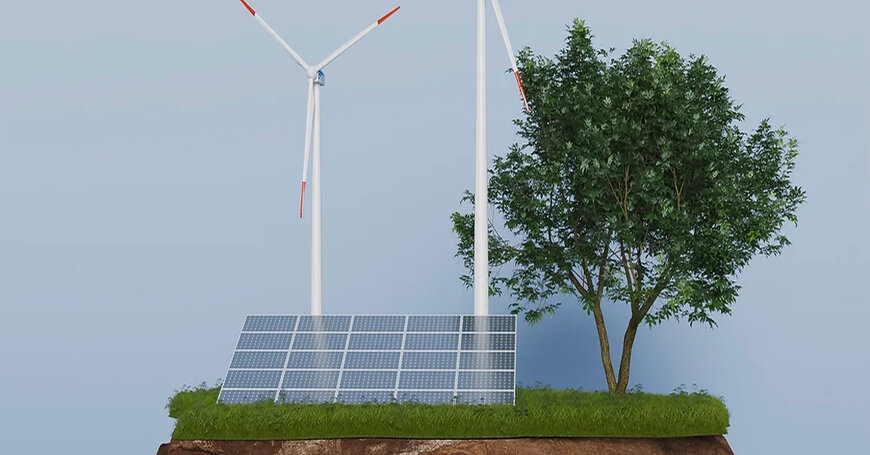
A cooperation between Serentica Renewables and Sanathan Polycot Private Limited establishes a 32 MW hybrid renewable energy supply system designed to provide continuous power for textile manufacturing. The agreement is structured as a long-term power purchase arrangement integrating multiple renewable sources into a firm supply profile.
Context of the Cooperation
Serentica Renewables develops and operates renewable energy systems for industrial consumers, with a focus on firm dispatchable renewable energy. Sanathan Polycot Private Limited, part of Sanathan Textiles Limited, produces polyester filament yarns, cotton yarns, and technical textiles, all of which require uninterrupted power for stable processing conditions.
Textile manufacturing processes are sensitive to power fluctuations, making direct reliance on intermittent renewable sources technically challenging. The cooperation addresses this constraint by combining generation assets and contractual mechanisms to ensure supply continuity. A Special Purpose Vehicle (SPV) has been created for project execution, with Sanathan holding a 26% stake and Serentica responsible for majority ownership and operational control.
Technical Solution and Responsibilities
The system is based on a hybrid renewable energy configuration that integrates solar and wind generation with balancing mechanisms to deliver round-the-clock power. Solar generation contributes primarily during daytime hours, while wind resources provide complementary output across different time periods, reducing overall variability.
Serentica is responsible for system design, development, forecasting, and dispatch management. The company aggregates power from multiple assets and aligns it with the consumption profile of the textile facility. This approach enables delivery of firm power under a single agreement, despite the variability of individual renewable sources.
The solution reflects broader developments in industrial decarbonization and digital infrastructure, where energy systems are increasingly managed through coordinated generation and demand alignment rather than standalone assets.
Deployment and Implementation
The renewable energy system will supply electricity to Sanathan’s manufacturing facility in Punjab through grid-connected infrastructure. The implementation does not require major modifications to plant operations, as the hybrid system is designed to match existing load requirements.
Project execution includes development of geographically distributed renewable assets, grid integration, and scheduling under applicable regulatory frameworks. Serentica manages engineering, procurement, construction, and long-term operation, including performance monitoring and dispatch coordination.
Applications and Use Cases
The primary application is continuous textile manufacturing, where stable power is required for processes such as spinning, filament extrusion, and technical textile production. These operations depend on consistent voltage and frequency conditions to maintain product quality and process efficiency.
The hybrid renewable model supports such requirements by reducing supply variability, making it compatible with industrial automation environments where downtime or instability can affect throughput.
Results and Expected Impact
The cooperation introduces a firm renewable energy supply model that reduces dependence on conventional power sources while maintaining operational reliability. By combining multiple generation sources and managing dispatch centrally, the system provides predictable energy delivery aligned with industrial demand.
In addition to lowering emissions intensity, the structure enables long-term cost visibility through the power purchase agreement. The project illustrates how hybrid renewable systems can be engineered to meet the technical and operational requirements of energy-intensive manufacturing sectors.
Edited by an industrial journalist Sucithra Mani with AI assistance.
www.serenticaglobal.com
