
www.industry-india.com
05
'26
Written on Modified on
Integrating DC Grid and Automation Systems in Electric Tugboats
Cochin Shipyard Limited collaborates with ABB to implement battery-powered propulsion and digital infrastructure for maritime port operations.
global.abb
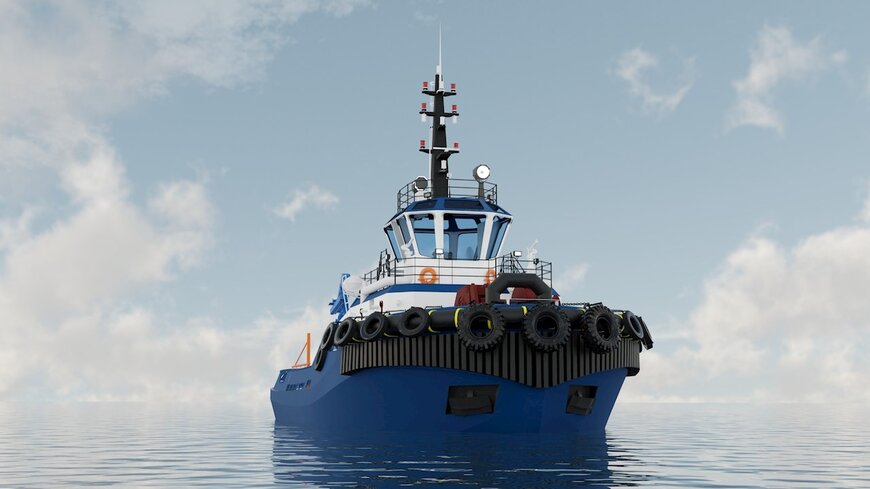
ABB has secured a contract from Cochin Shipyard Limited to engineer and supply the complete electrical, propulsion, automation, and digitalization systems for two new electric tugboats. Operating under Phase 1 of India’s Green Tug Transition Programme (GTTP), these vessels will deploy at the Jawaharlal Nehru Port Authority (JNPA) to support heavy containerized cargo operations with zero localized emissions.
Industrial Challenge and Collaborative Rationale
Harbor tug operations involve highly variable power demands, ranging from low-load transit to sudden, high-torque towing requirements. Transitioning these vessels from conventional diesel engines to electric drivetrains requires complex systems engineering to manage energy fluctuations safely.
Cochin Shipyard Limited utilizes its shipbuilding infrastructure to construct the hulls and integrate the machinery, while ABB provides the specialized electrical architecture. This cooperation combines local maritime manufacturing with international electrification expertise to meet the strict environmental timelines of the GTTP, which aims to convert domestic harbor fleets between 2024 and 2040.
Technical Solution and System Architecture
The core of the propulsion system relies on the ABB Onboard DC Grid power platform. Unlike traditional AC distribution networks, a DC-based architecture simplifies the integration of energy storage systems by eliminating the need for bulky transformers and synchronization equipment. This platform connects directly to the onboard battery banks, optimizing overall drivetrain efficiency and extending the operating range per charge cycle.
Power distribution is regulated by the Power and Energy Management System (PEMS), which matches available battery capacity with the real-time operational load demands of the tugboat. For long-term asset management, the vessels incorporate the ABB Ability Remote Diagnostic System for Marine. This digital infrastructure utilizes continuous condition monitoring and data transfer interfaces to facilitate remote troubleshooting and predictive maintenance schedules.
Deployment and Field Integration
The two electric tugboats are scheduled for delivery to Polestar Maritime in 2027. They will undergo field deployment at JNPA, India's largest container port, which handles approximately 50 percent of the nation's containerized cargo volume. The integration phase requires aligning ABB’s digital automation software with the physical vessel controls built by Cochin Shipyard Limited to ensure process stability during high-frequency maneuvering.
"Integrating electric propulsion and advanced automation into harbor tugs is a complex engineering undertaking, and selecting the right technology partner was critical," said Shri Jose VJ, Chairman and Managing Director, Cochin Shipyard Limited. "ABB’s proven systems and deep experience in this space made them the clear choice. We are building these vessels to last, to perform, and to demonstrate that Indian shipyards are ready to lead the industry’s green transition."
Expected Operational Impact
By replacing internal combustion engines with a battery-driven DC distribution network, the vessels eliminate direct fuel consumption during port maneuvers. The modular design of the DC grid allows the operators to scale or upgrade energy storage technologies in the future without rebuilding the core electrical infrastructure. This systemic approach provides measurable improvements in maintainability and ensures compliance with evolving regional maritime emission standards.
Edited by Evgeny Churilov, Induportals Media - Adapted by AI.
www.abb.com
