
www.industry-india.com
10
'26
Written on Modified on
Industrial Automation Expanded Through Sustainable Electric Mobility Initiatives
Tata Power deploys nationwide digital infrastructure to manage electric vehicle charging networks and minimize carbon emissions.
www.tatapower.com
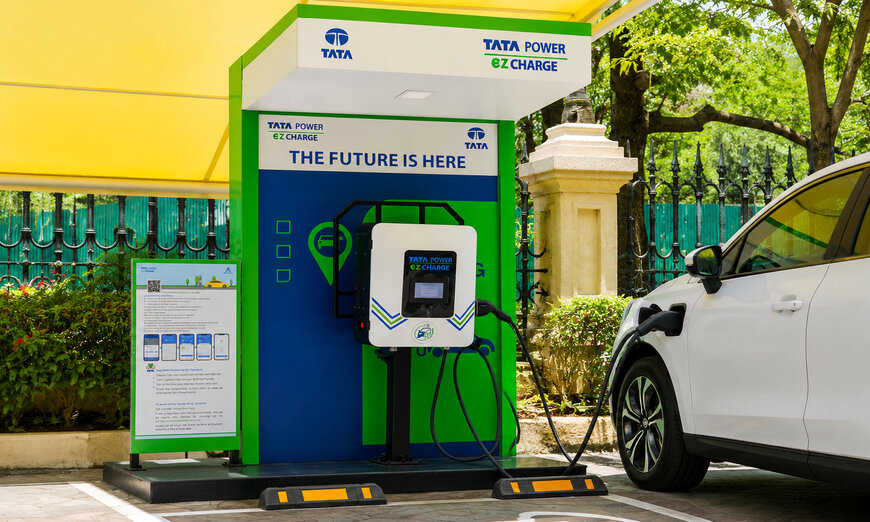
Tata Power is expanding its electric vehicle (EV) charging infrastructure across India to address the operational and environmental challenges of mainstream transport electrification. As of June 2026, accelerating running cost advantages are driving high-volume EV adoption from market margins to core public sectors. This shift requires extensive, resilient power distribution networks capable of supporting exponential multi-segment vehicular load growth while maintaining operational grid stability.
The broader industrial challenge centers on transitioning heavy transit networks from conventional fossil fuel reliance toward decentralized digital architecture. Establishing a unified, interoperable charging ecosystem across urban corridors and public highways is essential to fulfilling this objective, ensuring infrastructure keeps pace with rapid vehicular adoption.
Technical Solution and Functional Responsibilities
The underlying technical framework is driven by Tata Power EZ Charge, an integrated automation platform managing public, commercial, and residential infrastructure. Tata Power retains primary systemic responsibility for grid energy sourcing, structural high-voltage engineering, and the execution of end-to-end electrical installations. Automated subsystems within the network integrate radio frequency identification (RFID) technology and cloud computing interfaces to enable real-time session monitoring and digital payment synchronization.
Hardware specifications are divided between public high-traffic corridors and private spaces to optimize energy delivery:
- Public Infrastructure: The ecosystem utilizes all-weather, corrosion-resistant alternating current (AC) and direct current (DC) fast-charging configurations capable of withstanding extreme dust and temperature fluctuations. This includes heavy-duty hardware layers ranging from 30 kW to 60 kW DC chargers alongside strategic 240 kW ultra-fast setups equipped with multi-gun connectors for simultaneous fleet servicing.
- Residential Systems: The company delivers end-to-end residential charging systems, having completed over 2.3 lakh home charger installations to support a decentralized household infrastructure.
Deployment and Industrial Impact
Operational deployment targets over 700 cities and towns across India, creating a multi-domain charging matrix. To mark World Environment Day in June 2026, Tata Power executed structural expansions across high-density mobility corridors. These include dedicated fast-charging nodes at Kopa Mall in Pune, Indian Oil Corporation Limited (IOCL) roadside facilities on both carriageways of the Ahmedabad-Vadodara Expressway, and a six-gun Shapoorji Pallonji Mini Hub located in Kolkata.
The systemic integration of this automation layer has supported over 7.5 lakh active charging sessions, translating to more than 414 million green miles powered nationwide. By replacing tailpipe combustion with utility-scale energy distribution, the digital network has mitigated approximately 50,000 tonnes of carbon dioxide (CO2) emissions. This infrastructure scales dynamically alongside national market trends, which saw total EV sales surpass 2.55 million units in fiscal year 2026 across all four vehicle segments.
Edited by Sucithra Mani, Induportals editor - adapted by AI.
www.tatapower.com
Operational deployment targets over 700 cities and towns across India, creating a multi-domain charging matrix. To mark World Environment Day in June 2026, Tata Power executed structural expansions across high-density mobility corridors. These include dedicated fast-charging nodes at Kopa Mall in Pune, Indian Oil Corporation Limited (IOCL) roadside facilities on both carriageways of the Ahmedabad-Vadodara Expressway, and a six-gun Shapoorji Pallonji Mini Hub located in Kolkata.
The systemic integration of this automation layer has supported over 7.5 lakh active charging sessions, translating to more than 414 million green miles powered nationwide. By replacing tailpipe combustion with utility-scale energy distribution, the digital network has mitigated approximately 50,000 tonnes of carbon dioxide (CO2) emissions. This infrastructure scales dynamically alongside national market trends, which saw total EV sales surpass 2.55 million units in fiscal year 2026 across all four vehicle segments.
Edited by Sucithra Mani, Induportals editor - adapted by AI.
www.tatapower.com
