
www.industry-india.com
06
'26
Written on Modified on
Tata Power Renewable Energy Commissions 100.8 MW Jewali Wind Project
Maharashtra wind farm will generate 299 million units of clean electricity annually, supporting decarbonization and renewable energy targets.
www.tatapower.com
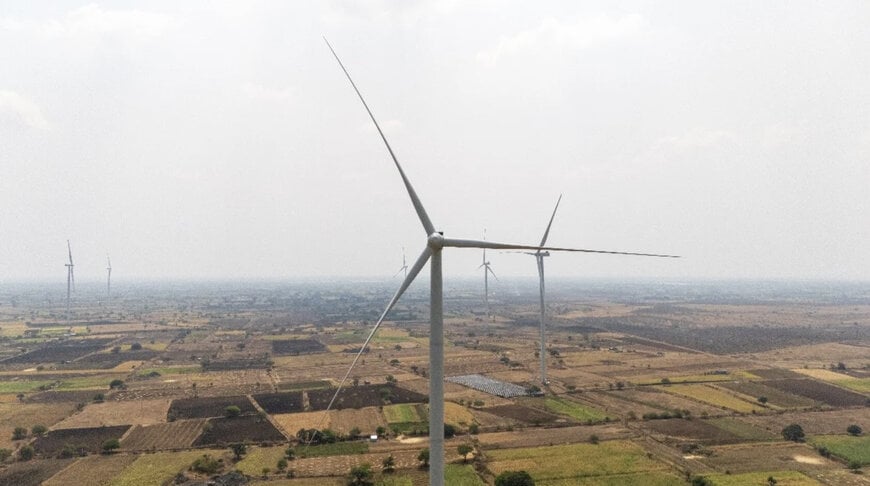
Tata Power Renewable Energy Limited (TPREL) has officially commissioned the 100.8 MW Jewali Wind Project in the Dharashiv district of Maharashtra to supply clean electricity directly to Tata Power Mumbai Distribution. This facility utilizes advanced wind turbine systems to strengthen the regional clean energy infrastructure and assist the utility sector in meeting mandatory Renewable Purchase Obligation targets.
Expanding Clean Energy Infrastructure
The Jewali Wind Project represents a measurable expansion in regional power generation, engineered to produce 299 million kilowatt-hours of renewable electricity annually. This generated output directly offsets approximately 245 million kilograms of carbon dioxide emissions each year. This offset calculation is based on an established emission reduction standard of 0.82 kilograms of CO2 per unit of electricity generated, providing a quantified mechanism for decarbonizing the utility supply chain. The operational activation of this site advances Tata Power's long-term operational framework, which targets 100 percent clean energy generation by the year 2045.
Wind Turbine Technology and Capacity Integration
At the core of the technical solution are 28 SG 3.6-145 Wind Turbine Generators, which operate on advanced horizontal-axis mechanics. These turbines capture wind energy and convert it into utility-grade electricity that feeds into the existing power grid. The completion of the Jewali site increases TPREL's total wind energy portfolio beyond 3.9 GW. This capacity includes 1.3 GW of active operational wind assets, with the remaining balance positioned across various stages of development in Rajasthan, Gujarat, Maharashtra, Andhra Pradesh, Karnataka, and Tamil Nadu.
Grid Application and Utility Supply Chain Benefits
The primary application area for this project is the municipal utility grid. By routing the generated electricity to the Mumbai distribution network, the project delivers a stable renewable energy supply to urban consumers while fulfilling regulatory compliance metrics. Including this new facility, the total renewable utility capacity for TPREL has reached 11.6 GW. The operational segment accounts for 6.7 GW, consisting of 5.4 GW of solar and 1.3 GW of wind capacity. The remaining 4.9 GW remains under implementation, encompassing 2.1 GW of solar projects, 2.6 GW of wind projects, and 0.2 GW of Battery Energy Storage Systems (BESS), scheduled for phased commissioning over the next 6 to 24 months.
Additional Context:
This section details technical specifications and competitive benchmarking not included in the original product announcement
The SG 3.6-145 wind turbines deployed at the Jewali site are manufactured by Siemens Gamesa and engineered specifically for low to medium wind conditions prevalent in the region. Each unit features a rated power output of 3.6 MW and a rotor diameter of 145 meters, creating a swept area of 16,513 square meters. This aerodynamic profile maximizes the Annual Energy Production (AEP) and minimizes the Levelized Cost of Energy (LCoE) compared to previous generation 2.2 MW models. In competitive benchmarking within the 3.0 to 4.0 MW segment, the SG 3.6-145 competes with platforms such as the Vestas V136-3.45 MW and the Goldwind GW140-3.4MW. The larger 145-meter rotor of the SG unit provides a comparative advantage in energy yield at lower wind speeds, utilizing a three-stage gearbox and a doubly-fed induction generator to ensure stable, grid-compliant power delivery.
Edited by Natania Lyngdoh, Induportals editor, assisted by AI.
www.tatapower.com
