
www.industry-india.com
17
'26
Written on Modified on
Waaree ESS Launches India's Advanced Automated BESS Container Manufacturing Facility
New 5.15 GWh facility strengthens domestic battery energy storage manufacturing with automated production and scalable solutions for utility and industrial applications.
waaree.com
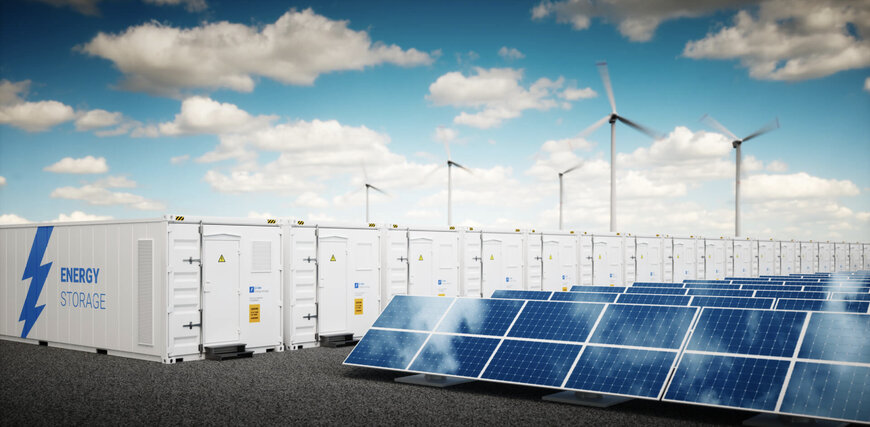
Waaree Energy Storage Solutions has commenced operations at a Battery Energy Storage System (BESS) container manufacturing facility in India. The plant utilizes automated production lines to manufacture integrated energy storage containers engineered for utility-scale and commercial power applications.
Production Capacity and Automation Infrastructure
The manufacturing facility operates with an upgraded capacity of 5.15 GWh, representing a structural increase from the originally planned 3.5 GWh baseline. This higher output capability was achieved through the physical debottlenecking of production throughput and the integration of battery cells featuring improved energy density. The assembly infrastructure incorporates Industry 4.0 automation, utilizing Automated Guided Vehicles (AGVs) for digital supply chain and material handling tasks. Automated assembly lines operate in conjunction with digital testing and quality assurance systems to produce standardized, scalable storage units.
Domestic Supply Chain Integration
The BESS container plant constitutes the initial operational phase of a comprehensive 20 GWh manufacturing roadmap. During the current financial year, the company plans to operationalize a 5.15 GWh battery pack manufacturing line alongside a 3.5 GWh lithium cell manufacturing facility. Establishing a localized energy storage ecosystem reduces dependency on imported technologies and provides the necessary hardware components to scale India's renewable energy infrastructure.
Grid Stability and Peak Demand Management
Battery Energy Storage Systems function by storing surplus renewable energy generated during off-peak periods and deploying it during intervals of peak electrical demand. This operational mechanism reduces renewable energy curtailment, limits reliance on conventional peaking power plants, and maintains baseline grid stability. Sunil Rathi, Director at Waaree, states that domestically manufactured energy storage systems are essential technical requirements for ensuring consistent power delivery and energy security as the grid integrates variable solar and wind generation sources.
Additional Context:
This section details technical specifications and competitive benchmarking not included in the original product announcement
Within the Indian utility-scale energy storage sector, BESS container manufacturing is evaluated based on localized cell-to-pack assembly and gigawatt-hour production scalability. Waaree's uprated 5.15 GWh capacity positions it competitively against established regional manufacturers such as Exide Energy Solutions, which is developing a 12 GWh cell and pack facility, and Amara Raja Energy & Mobility. The transition from a planned 3.5 GWh to 5.15 GWh via production debottlenecking reflects a manufacturing strategy to maximize throughput without strictly expanding the physical factory footprint. Furthermore, integrating 5.15 GWh of pack assembly with 3.5 GWh of planned domestic lithium cell manufacturing establishes a localized supply chain that mitigates reliance on imported storage units and provides cost-competitive alternatives for integrated solar-plus-storage project bids across the regional market.
Edited by Natania Lyngdoh, Induportals editor, assisted by AI.
www.waaree.com
