
www.industry-india.com
26
'26
Written on Modified on
Firm Renewable Power Deployment for Grid Distribution Networks
Tata Power Renewable Energy commissioned a solar generation and storage facility under an SJVN framework to supply regulated utilities.
www.tatapower.com
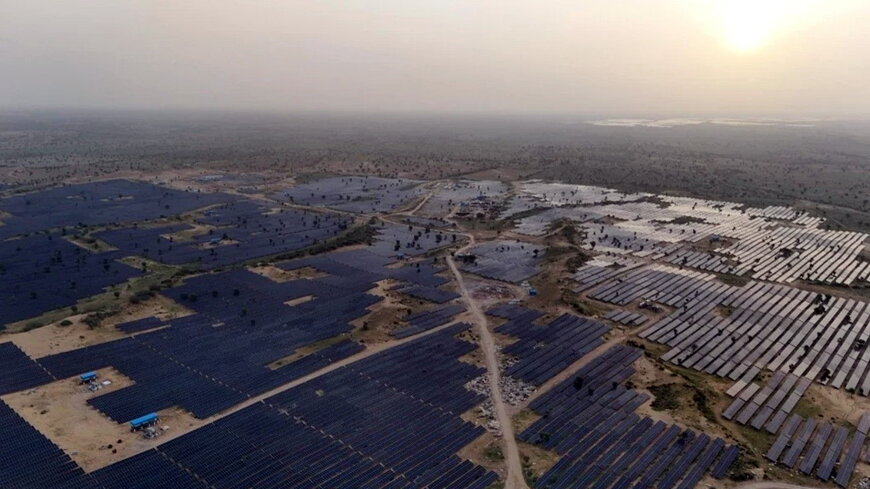
Tata Power Renewable Energy Limited (TPREL) commissioned a 190.5 MW solar firm and dispatchable renewable energy installation at Kalasar in Bikaner, Rajasthan. The asset forms part of a 460 MW contracted capacity allocated under the SJVN FDRE Tranche-1 framework.
Power generated from the facility is routed to three state power distribution companies: Haryana Power Purchase Centre (HPPC), Maharashtra State Electricity Distribution Company Limited (MSEDCL), and Noida Power Company Limited (NPCL). The inter-organizational structure coordinates central procurement, utility-scale private development, and state-level distribution networks to manage base-load demand using non-fossil generation.
Grid Integration and Technical Solution
Intermittent solar generation requires active power smoothing and voltage stabilization before interconnection with high-voltage distribution networks. TPREL deployed hybrid technical infrastructure to guarantee scheduled, firm dispatch:
- Battery Energy Storage Systems (BESS) buffer transient generation fluctuations and support peak-demand shifts.
- Harmonic Filter Banks eliminate electrical waveform distortions generated by large-scale solar inverters.
- Static Var Generator (SVG) units dynamically manage reactive power, stabilizing local grid voltage during rapid irradiance shifts.
Engineering procurement addressed supply chain bottlenecks for high-voltage transmission lines, mounting structures, and power electronics. On-site implementation included the construction of the grid switchyard in three months and the integration of the Harmonic Filter Bank within one month.
Utility Application and Capacity
The facility addresses the technical transition from intermittent solar delivery to predictable, scheduled energy output for utility operators. Active grid stabilization systems protect connected distribution infrastructure from power quality degradation while meeting contracted off-take obligations.
The commissioning brings TPREL operational utility capacity to 6.9 GW — comprising 5.6 GW solar and 1.3 GW wind — within a total renewable portfolio of 12.4 GW. The multi-utility supply structure supports long-term power purchase agreements across northern and western regional grids.
Edited by Evgeny Churilov, Induportals Media - Adapted by AI.
www.tatapower.com
Utility Application and Capacity
The facility addresses the technical transition from intermittent solar delivery to predictable, scheduled energy output for utility operators. Active grid stabilization systems protect connected distribution infrastructure from power quality degradation while meeting contracted off-take obligations.
The commissioning brings TPREL operational utility capacity to 6.9 GW — comprising 5.6 GW solar and 1.3 GW wind — within a total renewable portfolio of 12.4 GW. The multi-utility supply structure supports long-term power purchase agreements across northern and western regional grids.
Edited by Evgeny Churilov, Induportals Media - Adapted by AI.
www.tatapower.com
